How to Prepare for the Virginia State Board Cosmetology Exam
What does liability coverage cover on an auto policy?
It covers the damage and injuries you cause to other people when you're at fault in an accident. It generally has two parts: bodily injury liability (others' injuries) and property damage liability (others' property, like their vehicle). It's the required foundation of an auto policy, protecting you financially from your responsibility to others on the road, up to your policy's limits.
Does liability cover my own car?
No, this is the most common misunderstanding. Liability covers damage you cause to others' property, not your own vehicle. If you're at fault, your liability handles the other party's car, not yours. Coverage for your own car comes from separate coverages (commonly collision and other-than-collision coverage). Having liability alone does not mean your own vehicle is covered after an accident.
Does liability cover my own injuries?
No. Liability covers injuries you cause to other people, not your own medical costs. Coverage for your own injuries comes from separate coverage types (such as medical payments or personal injury protection, depending on the policy and where you live). Like your own vehicle, your own injuries require coverages beyond liability, which is part of why policies include more than just liability.
What are the two parts of liability coverage?
Bodily injury liability and property damage liability. Bodily injury liability covers injuries you cause to other people (the other driver, passengers, pedestrians) in an at-fault accident. Property damage liability covers damage you cause to others' property, most often their vehicle, but also things like fences or buildings. Together they cover the injuries and property damage you cause to others when you're at fault.
Why is liability required but it doesn't cover me?
Because liability exists to cover your responsibility to others, the harm you might cause them, which is why it's typically required to drive. It's outward-facing by design. Protecting yourself and your own vehicle is the purpose of other, separate coverages you can carry. So liability being required ensures others are covered when you're at fault; covering yourself is a separate choice through additional coverages.
If I only have liability, am I covered in an accident?
Only for the harm you cause others when you're at fault, not for your own vehicle or injuries. With liability alone, an at-fault accident would leave your own car repairs and your own injuries uncovered by that policy. That's why many drivers carry additional coverages. Understanding this gap is important, "I have liability" is not the same as "I'm covered for everything."
How do I know what my policy actually covers?
Review it with a licensed insurance agent. Because requirements, limits, and the specific coverages on your policy depend on your situation and your state, an agent can explain exactly what your liability limits are, what other coverages you have or don't, and what your overall protection looks like. This article explains liability in general terms; for your specific policy and decisions, an agent who can look at your situation is the right resource.
Quick Answer: Virginia's cosmetology licensing exam has two parts, a timed written theory test and an in-person practical skills test, both administered through the state's approved testing vendor. The written portion checks your knowledge of sanitation, infection control, basic chemistry, and hair, skin, and nail service procedures, along with a small set of Virginia-specific law questions. The practical portion has you perform real techniques, haircutting, thermal styling, chemical texture services, color application, and sanitation practices, in front of an evaluator and within set time limits for each station. You prepare for both the way you built the skill in the first place: repeated practice, timed run-throughs, and steady review rather than a last-minute cram. Most students who struggle on exam day didn't lack talent. They just hadn't rehearsed under the same pressure the exam creates.
You're a few weeks out from your last day of clinic hours. Your mannequin head has finally earned a permanent spot on the shelf, and the date of your state board exam is circled on the calendar, staring back at you every time you walk past it. Maybe you feel ready most days and then, out of nowhere, a flash of doubt hits: what if you blank on a theory question, or your hands shake through a chemical service while someone with a clipboard watches your every move?
That doubt is normal, and it doesn't mean you aren't prepared. It usually means you haven't yet mapped out exactly what the exam asks of you or built a study plan that matches it. This guide walks through what the Virginia cosmetology licensing exam actually consists of, how to study for the written and hands-on portions separately, and how to walk in with a level head instead of a racing pulse.
What the Exam Actually Covers
Virginia's cosmetology license is earned through two separate exams, both required before the Board issues your license. The state contracts with an outside testing vendor to administer them, and the content is built around a national theory exam format combined with a hands-on skills evaluation specific to the services Virginia expects licensed cosmetologists to perform safely.
The written theory exam is a timed, multiple-choice test built around a handful of content areas. The largest share of questions covers hair care services: consultation, tools, shampooing and conditioning, cutting, styling, and chemical services like coloring, waving, and relaxing. A close second covers scientific concepts, meaning infection control and sanitation, basic anatomy of hair, skin, and nails, and the chemistry behind the products you use every day. Smaller sections test skin care topics like facials and hair removal, and nail care topics like manicures and enhancements. A short set of questions covers Virginia's own laws and regulations for the profession, separate from the national content.
The practical skills exam is where you demonstrate that you can actually do the work, not just describe it. Candidates move through a series of timed service stations under the observation of an evaluator, typically including work area setup and client prep, haircutting, thermal curling, chemical waving, predisposition and strand testing, color retouch, highlighting with foil, relaxer application, and a blood exposure procedure. Sanitation and infection control aren't a separate station, they run through every single one, since evaluators are watching how you set up, work, and clean between services just as closely as they're watching your technique. Eyebrow hair removal by tweezing and simulated wax is also part of the assessment.
Nothing about this list should feel unfamiliar. It mirrors the services you've already practiced dozens of times in school. The exam isn't asking you to learn something new at the last minute, it's asking you to prove you can perform what you've already learned, under a clock, while someone else watches.
How to Study for the Written Theory Exam
The theory exam rewards steady, spread-out review far more than a single marathon study session the night before. Treat it like a subject you need to know cold, not one you can skim your way through.
Practice tests and spaced review
Working through practice questions repeatedly, over several weeks rather than a few days, helps information stick in a way that rereading your textbook once never will. Set a recurring block of time, even twenty minutes a few times a week, and mix topics rather than studying one category to death and ignoring the rest.
Learn sanitation and infection control by heart
This is one of the most heavily weighted categories on the exam, and it's also one of the easiest to lose points on if you're rusty. Know your disinfectant contact times, your sharps and blood exposure protocols, and the difference between cleaning, disinfecting, and sterilizing. These aren't abstract facts, they're the same habits you should already be practicing every time you set up a station in school.
Build a working knowledge of basic chemistry
You don't need to become a chemist, but you do need to understand pH, how chemical services alter hair structure, and why timing and product selection matter for safety as much as for results. If chemistry terminology has always felt intimidating, connect it back to services you've already performed. Understanding why a relaxer works the way it does makes the vocabulary stick far better than memorizing definitions in isolation.
Warning: Don't leave sanitation and safety review for the final few days before your test. It's one of the most heavily tested areas on the theory exam, and cramming it late tends to produce shaky recall exactly when you need it most. Build it into your study rotation early and keep circling back to it.
How to Prepare for the Practical Skills Exam
The practical portion tests something books can't teach you: comfort. Comfort with your tools, comfort with timing, and comfort performing in front of someone who's grading you.
Repeat the techniques until they're automatic
Every haircut, chemical service, and sanitation step you've practiced on a mannequin or a real client during school is building muscle memory for this exact moment. The more times your hands have done a technique without your brain having to consciously walk through every step, the less likely nerves are to throw you off course during the exam.
Practice on the clock
Each station in the practical exam has a time limit, and running out of time on a step you know how to do is one of the most avoidable ways to lose points. Start timing yourself well before your exam date. Practice a full haircut or a chemical waving procedure against a stopwatch, not just to see if you finish, but to find where you tend to slow down and why.
Get used to being watched
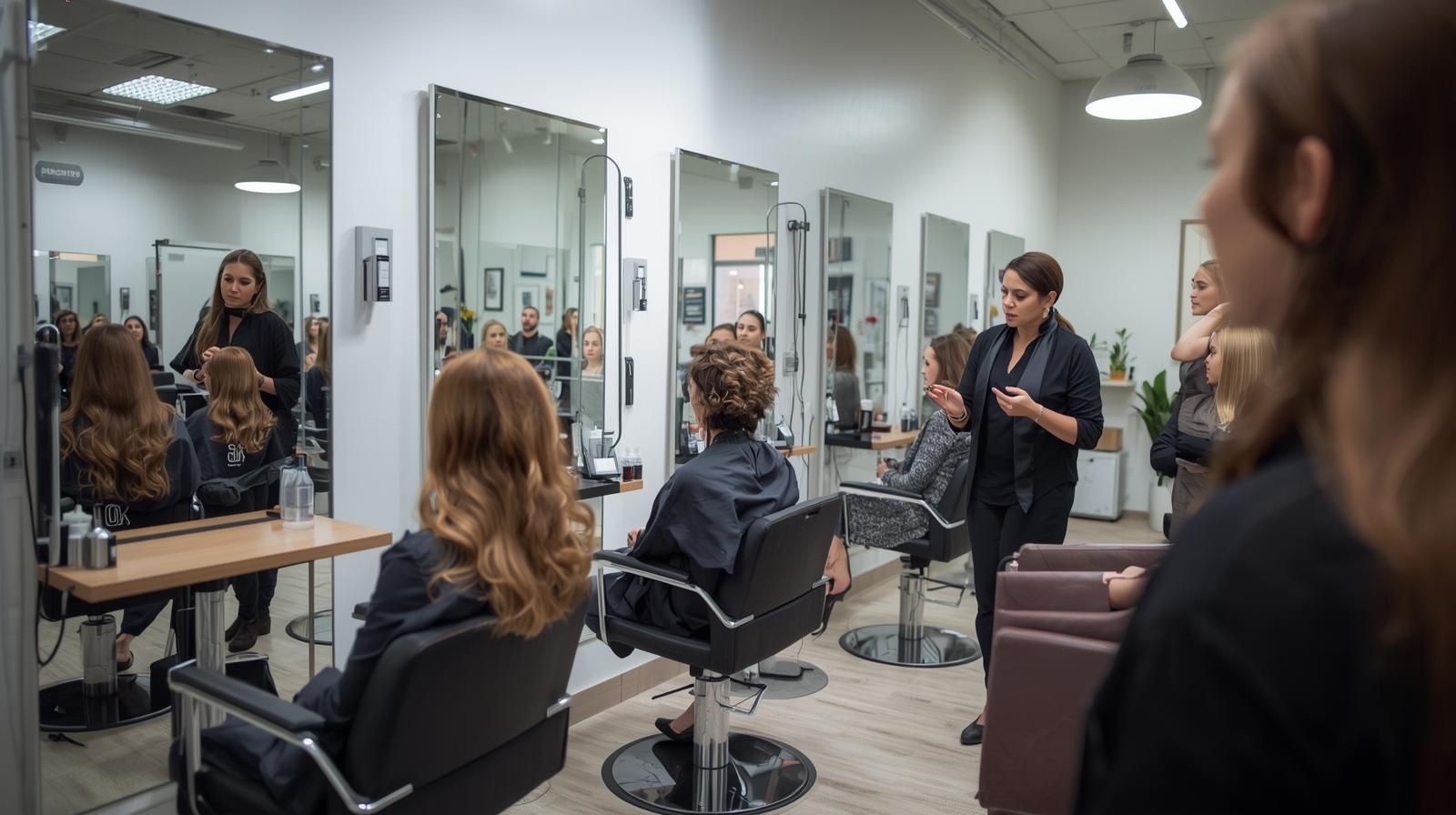
During school, you've likely worked in a room full of classmates and instructors, and you've served real clients who are paying attention to what you're doing. That's not incidental practice, it's exam simulation. The more comfortable you get performing a technique while someone stands nearby observing, the less the presence of an evaluator will rattle you on the actual day.
Building a Study Schedule and a Level Head Going In
Give yourself real lead time rather than cramming both exams into the final week of school. A workable approach starts four to six weeks out: rotate through theory review a few times a week while continuing timed practical practice on your regular school days, then narrow your focus in the final week to your weakest areas rather than reviewing everything equally.
As for exam day itself, expect a structured, professional environment where you'll need valid identification and any confirmation materials your testing appointment requires. Beyond that, treat it the way you'd treat a normal clinic day: arrive with your kit organized, your area prep habits automatic, and your attention on the client or station in front of you rather than on the person evaluating you.
The mindset shift that helps most students is this: the exam is not a new hurdle, it's a chance to show what you've already built. You've cut hair, mixed color, and performed chemical services under supervision for months. The board exam simply formalizes what your instructors have already watched you do successfully, over and over.
Tip: In the weeks before your exam, ask an instructor or classmate to watch and time you the way an evaluator would, even for services you feel confident about. Performing under observation is a skill on its own, and practicing it deliberately makes the real exam feel far more familiar.
Why Structured Training Produces More Exam-Ready Graduates
Self-directed study can get you through the theory exam if you're disciplined about it. But the practical exam tests something that's much harder to build alone: the physical repetition and client-facing comfort that come from consistent, guided hands-on practice.
Programs with small class sizes and structured practice time tend to produce more exam-ready graduates for a straightforward reason. Students get repeated feedback on technique while there's still time to correct it, rather than discovering a habit is wrong on exam day. They also get real client experience throughout training, not just at the end, which builds the kind of composure under observation that timed practice alone can't fully replicate. Mentorship matters here too. An instructor who's watched you cut a hundred haircuts can spot the specific thing slowing you down in a way a textbook or a solo practice session never will.
None of this replaces your own effort. But training built around repetition, feedback, and real-client experience gives you far more chances to work out the kinks before the one day that counts.
Frequently Asked Questions
Do I have to retake both exams if I fail one part?
No. You'll only retake the portion you didn't pass, either the written or practical exam. Continue practicing both so your knowledge and hands-on skills stay fresh before retesting.
How soon after finishing school can I take the exam?
After completing required training hours and your school's eligibility verification, you can usually schedule the exam within days or weeks, allowing you to test while everything remains fresh.
What happens if I run out of time on a station during the practical exam?
Running out of time may reduce your score for that station. Regular timed practice helps improve pacing, confidence, and efficiency so you can complete required tasks comfortably.
Can I bring my own tools and kit to the practical exam?
Yes, candidates generally bring their own professional kit. Always review the testing vendor's approved supplies list beforehand to ensure every required tool meets current examination standards.
Is the written exam or the practical exam harder to pass?
Difficulty varies by student. Some struggle with theory questions, while others find practical demonstrations more stressful. Preparing each section with different study methods improves overall confidence and performance.
How many times can I retake the exam if I don't pass?
Virginia allows exam retakes under current state and testing vendor policies. Review your score report, strengthen weaker areas, and prepare thoroughly before scheduling another attempt for better results.
Building Confidence Beyond Exam Preparation
Preparing for the Virginia State Board Cosmetology Exam is about far more than memorizing information or completing a checklist of practical tasks. Success comes from combining consistent theory review with repeated hands-on practice until each service feels natural under timed conditions. Students who dedicate steady effort over several weeks typically walk into the testing center feeling more composed because they have already practiced the same skills and routines countless times before the exam.
For aspiring cosmetologists in Lynchburg, VA, choosing a school that emphasizes repetition, mentorship, and real-world salon experience can make the transition from student to licensed professional much smoother. With 10
years of experience, Pavia Hair Academy
focuses on developing technical ability alongside professional confidence, helping students build habits that support both state board success and long-term careers in the beauty industry.