What Skills Do You Learn in Cosmetology School?
What does liability coverage cover on an auto policy?
It covers the damage and injuries you cause to other people when you're at fault in an accident. It generally has two parts: bodily injury liability (others' injuries) and property damage liability (others' property, like their vehicle). It's the required foundation of an auto policy, protecting you financially from your responsibility to others on the road, up to your policy's limits.
Does liability cover my own car?
No, this is the most common misunderstanding. Liability covers damage you cause to others' property, not your own vehicle. If you're at fault, your liability handles the other party's car, not yours. Coverage for your own car comes from separate coverages (commonly collision and other-than-collision coverage). Having liability alone does not mean your own vehicle is covered after an accident.
Does liability cover my own injuries?
No. Liability covers injuries you cause to other people, not your own medical costs. Coverage for your own injuries comes from separate coverage types (such as medical payments or personal injury protection, depending on the policy and where you live). Like your own vehicle, your own injuries require coverages beyond liability, which is part of why policies include more than just liability.
What are the two parts of liability coverage?
Bodily injury liability and property damage liability. Bodily injury liability covers injuries you cause to other people (the other driver, passengers, pedestrians) in an at-fault accident. Property damage liability covers damage you cause to others' property, most often their vehicle, but also things like fences or buildings. Together they cover the injuries and property damage you cause to others when you're at fault.
Why is liability required but it doesn't cover me?
Because liability exists to cover your responsibility to others, the harm you might cause them, which is why it's typically required to drive. It's outward-facing by design. Protecting yourself and your own vehicle is the purpose of other, separate coverages you can carry. So liability being required ensures others are covered when you're at fault; covering yourself is a separate choice through additional coverages.
If I only have liability, am I covered in an accident?
Only for the harm you cause others when you're at fault, not for your own vehicle or injuries. With liability alone, an at-fault accident would leave your own car repairs and your own injuries uncovered by that policy. That's why many drivers carry additional coverages. Understanding this gap is important, "I have liability" is not the same as "I'm covered for everything."
How do I know what my policy actually covers?
Review it with a licensed insurance agent. Because requirements, limits, and the specific coverages on your policy depend on your situation and your state, an agent can explain exactly what your liability limits are, what other coverages you have or don't, and what your overall protection looks like. This article explains liability in general terms; for your specific policy and decisions, an agent who can look at your situation is the right resource.
Quick Answer: Cosmetology school teaches two kinds of skills that work together. On the technical side, you learn cutting, coloring, blonding, extensions, and styling, moving from foundational technique to more advanced, editorial-level work. On the people side, you learn how to run a client consultation, carry yourself professionally, and communicate inside a working salon. Neither half is optional. A stylist who can execute a flawless balayage but can't translate what a client actually wants will struggle just as much as one with great bedside manner and no technical foundation.
You already know you love doing hair. Maybe you've been the one your friends call before prom, the one who can't walk past a salon window without studying the cut in the chair, the one who watches color correction videos for fun instead of scrolling past them. What you might not know yet is what a cosmetology program actually does with that instinct, how it takes "I'm good with hair" and turns it into a set of teachable, repeatable, professional skills. A lot of people picture cosmetology school as an extension of what they already do at home, a few new tools and some practice. What you actually get is more structured than that, and more interesting. You're not just learning to cut hair. You're learning to read a head of hair, read a client, and read a room, and those are three different skill sets a good program builds on purpose.
The Technical Skills You'll Build
Technical training in cosmetology school moves in a deliberate order. You start with fundamentals that feel almost rigid in their precision, and you build toward specialty work that lets you develop a signature style. That progression typically breaks down like this.
Cutting
Before you touch a razor or attempt anything trend-driven, you build foundational cutting technique: one-length and blunt cutting, body positioning, sectioning discipline, and clean lines. This part of training is repetitive on purpose. Structured repetition is what makes your tension consistent and your results symmetrical across different hair densities, so a cut looks the same whether the client has fine, thick, or curly hair. From there you move into layering, graduation, and weight distribution, learning how elevation and overdirection create movement in a cut. Texturizing and razor work come next, including point cutting, slide cutting, and razor detailing, with real attention paid to precision so you don't over-thin a client's hair by accident. Good programs also dedicate time to curly and textured hair specifically, teaching you to recognize curl patterns, manage shrinkage, and choose between wet and dry cutting strategies. That's a distinct skill from straight-hair cutting, and one a lot of newer stylists never get formal instruction in.
Coloring
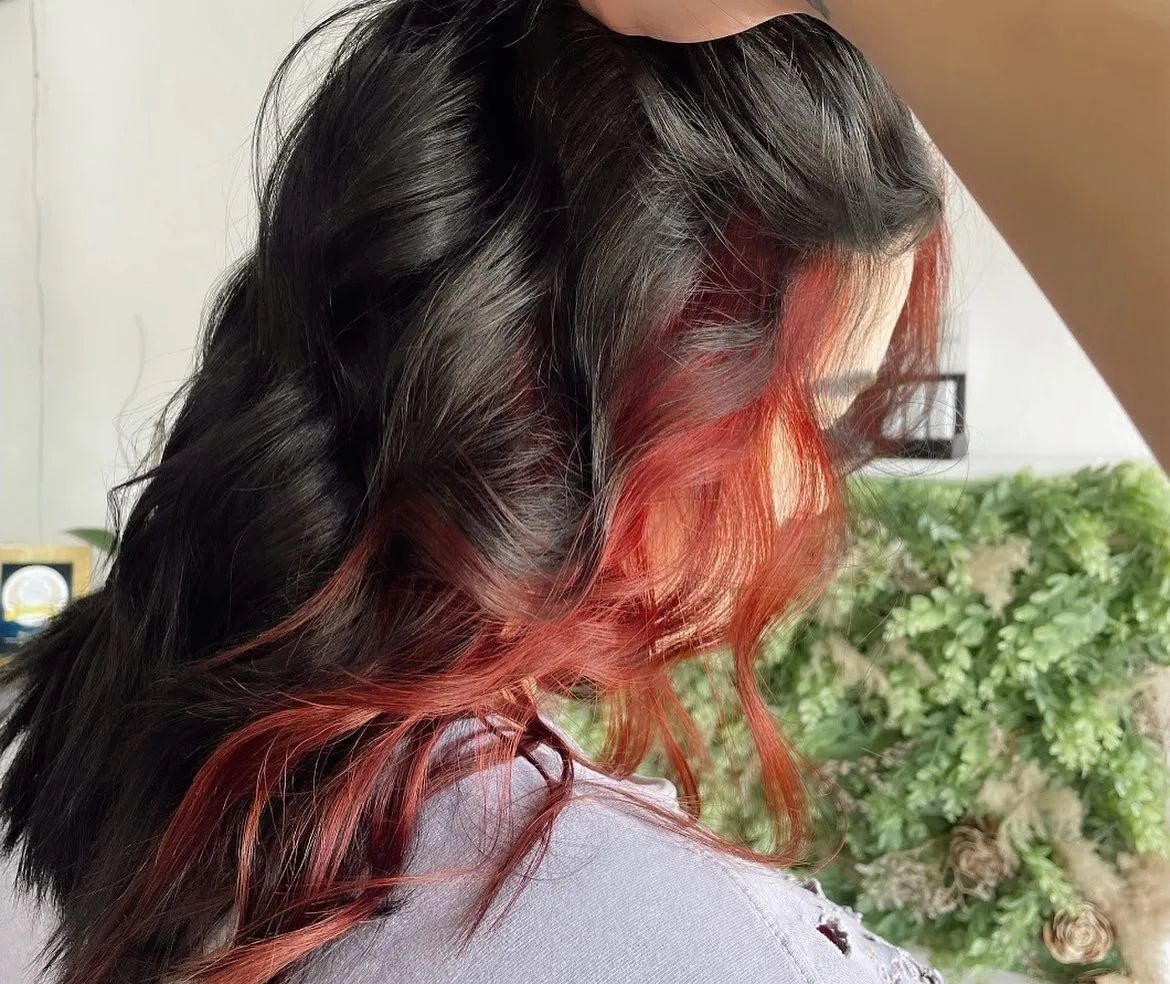
Color training starts with formulation and theory, not application. You learn how primary, secondary, and tertiary color relationships interact, how to predict what a formula will lift to before you mix it, and how to correct unwanted warmth when a result doesn't land where you expected. Application methods get plenty of hands-on time too: foiling, slicing, weaving, and micro-sectioning, along with the section geometry and visual weight distribution that make a color placement look intentional instead of random. You also learn corrective work, the kind of structured troubleshooting that resolves banding, uneven lift, or patchy saturation, because clients will eventually walk in with a color problem someone else created and you'll need a plan, not a guess.
Blonding
Blonding gets treated as its own specialty in a well-built program, not a subset of general coloring. It's grounded in chemistry as much as artistry: how light interacts with melanin, how undertones influence lift, and how your formulation choices shape the final result. You'll practice classic foil placement and saturation methods first, then move into freehand and balayage techniques, which rely on hand positioning and product distribution to create soft, natural-looking transitions rather than hard lines. Toning is its own skill inside blonding, covering demi-permanent glosses, shadow roots, and toner customization, with attention to pH balance and porosity so the finished color holds. Advanced training also covers double-process work, scalp lightener safety, and bond-protection integration, because keeping hair healthy through a major lightening service is part of doing the job well.
Extensions
Extension training covers multiple installation systems, because different clients and different hair need different methods. You'll learn sew-in wefts, which involve braiding foundations and anchor track placement; tape-in extensions, which require precise panel spacing and adhesive alignment; fusion and keratin bonds, which use heat-controlled bonding and strand-by-strand placement; and micro-link or beaded systems, which depend on bead sizing and compression control to prevent slippage. Alongside installation, you learn to assess scalp condition and hair density before recommending a method, blend color across natural and extension hair so the transition disappears, and handle safe removal without compromising natural hair. Extension work rewards precision and patience in equal measure, and it opens up real specialization once you're working.
Styling
Styling and finishing round out the technical side. You'll build skill with professional blowouts and thermal styling, learning round brush tension control, airflow direction, and heat settings that produce a consistent, polished result. Training covers sleek smoothing, volume building, and shape-defining techniques, along with the tools behind them (shears, razors, clippers, flat irons, curling tools, and diffusers) with attention to ergonomic handling so the work doesn't wear on your body over years behind a chair. Good programs also fold in trend awareness and editorial or session-style finishing, so you're learning how to interpret a reference photo or a runway look and translate it into something wearable. That combination, technical control plus creative interpretation, is what separates a stylist who can execute a request from one who can improve on it.
Tip: If you're deciding what to focus on early in a program, resist the urge to skip the fundamentals to get to the "fun" specialty work. Every advanced technique, from freehand balayage to fusion extensions, depends on the sectioning, tension, and formulation instincts you build in the foundational stages. Rushing that stage shows up later as inconsistency.
The Soft Skills You'll Develop
Technical skill gets you in the door. Soft skills are what keep a client coming back to you specifically instead of whoever's available. This part of the training often surprises people, because it's structured, practiced, and evaluated just as seriously as a haircut.
Client consultations
A consultation is a skill you practice like any other. It starts with active listening: asking open-ended questions that uncover a client's actual goals, lifestyle habits, and how much maintenance they're realistically willing to do. Then it moves into clarifying and confirming, restating what you heard so there's no gap between what a client said and what they meant. This matters because clients rarely walk in with technical vocabulary. Someone might say they want "something low-maintenance but still fun," and your job is to translate that into an actual service plan, using reference photos and visual comparisons to set expectations that are honest about what's achievable given their hair's condition and history. You also learn to manage timing discussions, address hesitation, and suggest adjustments when a request isn't realistic in one visit. A good program treats this as foundational, because a haircut lasts weeks but the impression a client walks away with forms in the first few minutes.
Professionalism
Reliability and etiquette are part of the curriculum, not just an expectation you're supposed to figure out on your own. That includes time management, being ready for a client at their appointment time and respecting the schedule of everyone else around you, and it extends into nonverbal communication: posture, eye contact, facial expression, and tone, all of which project confidence even while you're still building technical speed. Strong professional presence increases a client's comfort, reduces their uncertainty about a service, and encourages repeat visits, the difference between a one-time appointment and a client who becomes part of your book. You'll also practice handling dissatisfaction calmly when something doesn't land the way a client expected, because it happens to every stylist eventually, and how you handle it says more about your career than any single service does.
Salon communication
Working in a salon means working inside a team, not in isolation. You learn how to coordinate with colleagues sharing a station or a color room, how to communicate with a front desk about timing, and how to manage a client relationship across multiple visits rather than treating each appointment as a standalone transaction. Part of that is learning to recommend services that genuinely fit what a client needs rather than upselling for its own sake, because trust is what turns a first-time guest into someone who books their next three appointments before they leave the chair. Building a returning clientele is, in a lot of ways, the actual long game of this career, built one honest, well-communicated appointment at a time.
State licensing exams reflect this same balance. The national cosmetology theory exam most states use is built around several content domains, and client consultation shows up as a formally tested category within hair services, alongside cutting, coloring, and chemical texture work. That's not incidental. It reflects an industry-wide understanding that consultation and communication are core competencies, evaluated the same way a formula or a cutting technique is, not treated as a soft extra. State cosmetology boards, including Virginia's, set curriculum standards requiring programs to cover both the technical service areas and the client-facing skills that go with them.
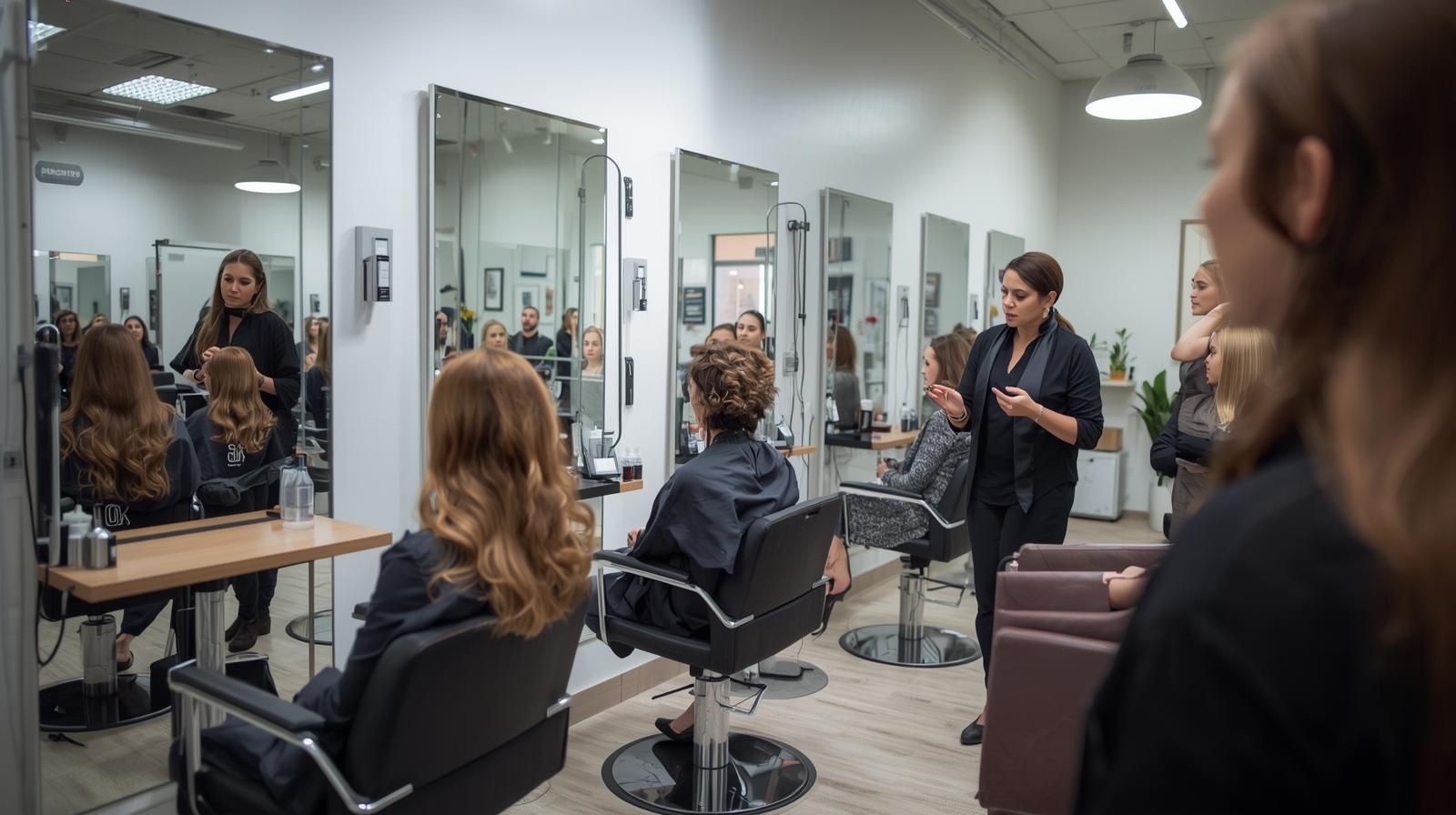
If you're in the Lynchburg area, including Timberlake, Rustburg, Concord, or Amherst, you'll likely find the client base you train on reflects a real mix of hair types, textures, and requests, a genuine advantage. Training on a range of real clients, rather than a narrow set of mannequin heads, is what makes the consultation and communication skills above feel natural by the time you're licensed instead of theoretical.
What This Adds Up To
Put the technical and soft skills together and you can see why cosmetology programs are structured the way they are. A stylist who only has technical training can execute a cut or a color, but without consultation skills, they're guessing at what the client actually wants. A stylist with strong people skills and weak technical grounding can build rapport but can't deliver the result that rapport promised. Programs that work well teach both sides in parallel, so by the time you're working with real clients, the technical decision-making and the conversation behind it happen almost simultaneously. That's what a confident, working stylist looks like day to day: not two separate skill sets, but one integrated way of doing the job.
Frequently Asked Questions
Do I need to already be good at hair to start a cosmetology program?
No. Programs take you from foundational technique forward, which is why early training focuses on sectioning, tension, and basic cutting first. Natural interest and willingness to practice matter more than existing skill.
How does a program teach something like "reading a client" if it's not a physical technique?
Through structured, repeated practice, just like technical skills. You practice consultations with real feedback, learn specific questions to ask, and get corrected on translating vague requests into concrete plans until it feels natural.
Is color work harder to learn than cutting, or the other way around?
They're different kinds of difficult. Cutting relies on repetition and muscle memory, while coloring adds chemistry and prediction, since you formulate toward a result you won't fully see until processed. Most students favor one.
Will I get to specialize in something like extensions or blonding, or is everything general?
Most programs teach all core service areas first for a well-rounded foundation, then let you go deeper into specialties like blonding or extensions as you progress. Where you gravitate often becomes your signature strength.
Two Skill Sets, One Confident Career Ahead
Cosmetology school asks more of you than most people expect walking in, and that's exactly what makes it worth taking seriously. You're not just memorizing steps or repeating motions until they stick. You're building real judgment, the kind that lets you look at a head of hair and know what it needs, then look at a client and understand what they're actually asking for. That combination is what eventually turns a technically capable beginner into a stylist people trust enough to keep coming back to.
With 10
years of experience training stylists in Lynchburg, Virginia, Pavia Hair Academy
builds both sides of that skill set through hands-on training, small class sizes, and personalized mentorship from instructors who work alongside every student. Real-client salon experience gets you practicing consultation and technique together from early on, so those two skills grow in tandem instead of separately. That's the foundation a confident, working stylist is actually built on.