What to Expect on Your First Day of Cosmetology School
Building Confidence Beyond Exam Preparation
Preparing for the Virginia State Board Cosmetology Exam is about far more than memorizing information or completing a checklist of practical tasks. Success comes from combining consistent theory review with repeated hands-on practice until each service feels natural under timed conditions. Students who dedicate steady effort over several weeks typically walk into the testing center feeling more composed because they have already practiced the same skills and routines countless times before the exam.
For aspiring cosmetologists in Lynchburg, VA, choosing a school that emphasizes repetition, mentorship, and real-world salon experience can make the transition from student to licensed professional much smoother. With 10
years of experience, Pavia Hair Academy
focuses on developing technical ability alongside professional confidence, helping students build habits that support both state board success and long-term careers in the beauty industry.
What does liability coverage cover on an auto policy?
It covers the damage and injuries you cause to other people when you're at fault in an accident. It generally has two parts: bodily injury liability (others' injuries) and property damage liability (others' property, like their vehicle). It's the required foundation of an auto policy, protecting you financially from your responsibility to others on the road, up to your policy's limits.
Does liability cover my own car?
No, this is the most common misunderstanding. Liability covers damage you cause to others' property, not your own vehicle. If you're at fault, your liability handles the other party's car, not yours. Coverage for your own car comes from separate coverages (commonly collision and other-than-collision coverage). Having liability alone does not mean your own vehicle is covered after an accident.
Does liability cover my own injuries?
No. Liability covers injuries you cause to other people, not your own medical costs. Coverage for your own injuries comes from separate coverage types (such as medical payments or personal injury protection, depending on the policy and where you live). Like your own vehicle, your own injuries require coverages beyond liability, which is part of why policies include more than just liability.
What are the two parts of liability coverage?
Bodily injury liability and property damage liability. Bodily injury liability covers injuries you cause to other people (the other driver, passengers, pedestrians) in an at-fault accident. Property damage liability covers damage you cause to others' property, most often their vehicle, but also things like fences or buildings. Together they cover the injuries and property damage you cause to others when you're at fault.
Why is liability required but it doesn't cover me?
Because liability exists to cover your responsibility to others, the harm you might cause them, which is why it's typically required to drive. It's outward-facing by design. Protecting yourself and your own vehicle is the purpose of other, separate coverages you can carry. So liability being required ensures others are covered when you're at fault; covering yourself is a separate choice through additional coverages.
If I only have liability, am I covered in an accident?
Only for the harm you cause others when you're at fault, not for your own vehicle or injuries. With liability alone, an at-fault accident would leave your own car repairs and your own injuries uncovered by that policy. That's why many drivers carry additional coverages. Understanding this gap is important, "I have liability" is not the same as "I'm covered for everything."
How do I know what my policy actually covers?
Review it with a licensed insurance agent. Because requirements, limits, and the specific coverages on your policy depend on your situation and your state, an agent can explain exactly what your liability limits are, what other coverages you have or don't, and what your overall protection looks like. This article explains liability in general terms; for your specific policy and decisions, an agent who can look at your situation is the right resource.
Quick Answer: Your first day of cosmetology school typically starts with orientation: checking in, a campus tour, meeting your instructors and classmates, and going over what the program actually looks like week to week. From there, expect paperwork, kit distribution, and an introduction to sanitation and infection control, since that foundation underlies every service you'll eventually learn. Hands-on work on day one is usually light, maybe getting familiar with your tools or a mannequin head, rather than diving into full techniques. Feeling nervous is normal and doesn't mean you're not ready. Programs built around small classes and hands-on mentorship are designed specifically to catch that uncertainty early and turn it into steady progress.
You've probably pictured this morning more than once: pulling into the parking lot, walking through the door, and hoping you don't look as nervous as you feel. Maybe you've laid out your first-day outfit twice already, or double-checked your bag against the supply list you were emailed weeks ago. That's normal. Almost everyone who's ever started
cosmetology school remembers some version of that same mix of excitement and low-grade panic, and it tends to fade faster than people expect once the day actually gets moving.
Checking In and Getting Oriented
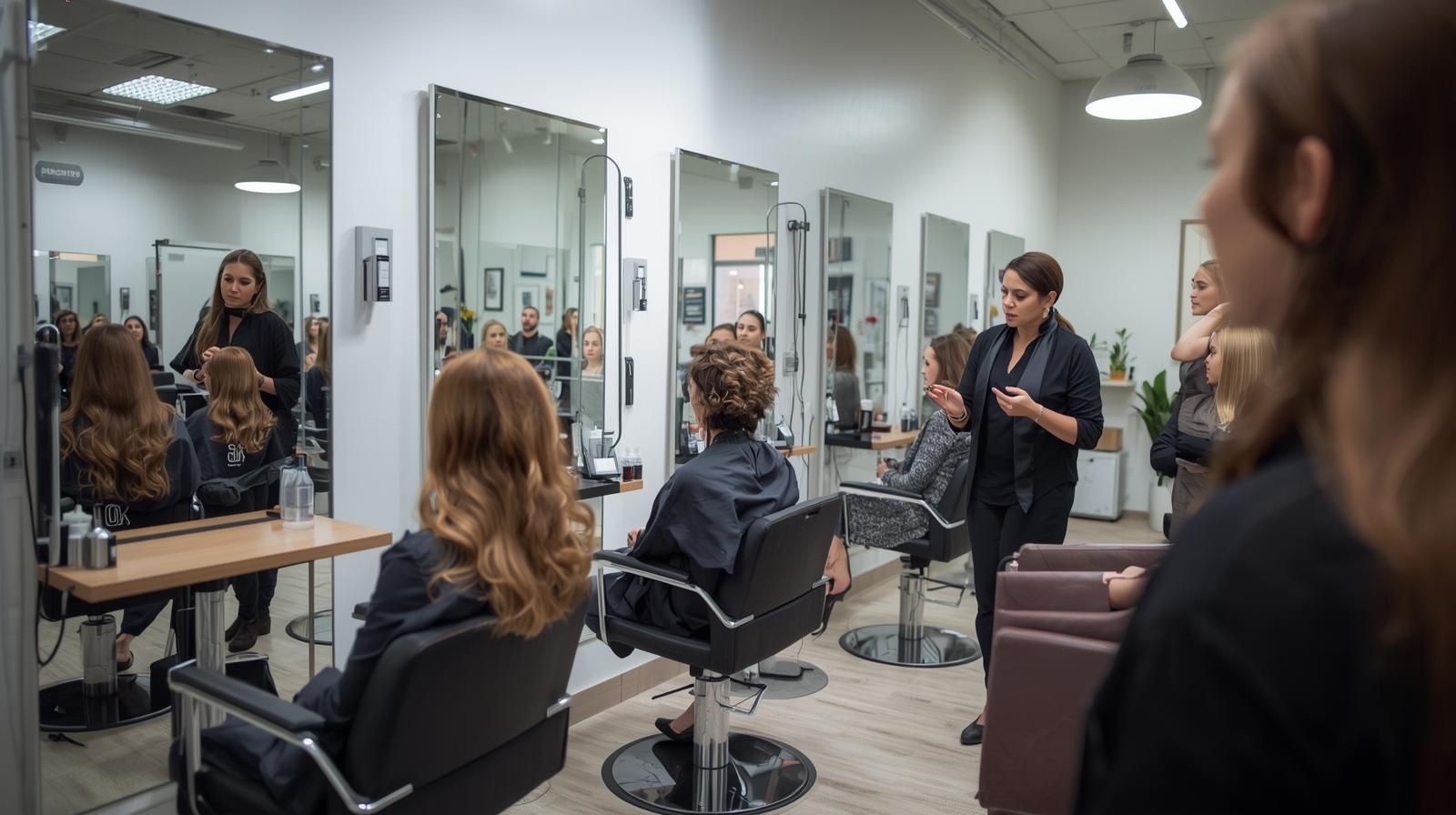
Most first days start with the basics: signing in, getting a name tag or student ID sorted, and settling into a room with the rest of your incoming class. From there, orientation usually covers a walkthrough of the building, so you know where your classroom is, where the working salon floor is, and where supplies and break areas live. You'll likely meet your lead instructors here too, along with a run-through of what a typical week in the program looks like once training gets underway.
Expect some paperwork
Enrollment forms, program agreements, and any last details from admissions tend to get wrapped up on day one if they weren't finished earlier. It isn't the most exciting part of the morning, but it's usually quick, and it clears the way for the parts of the day you actually came for.
You'll likely get your kit
Many programs distribute the tools, mannequin heads, and supplies you'll use throughout training during orientation. Take a few minutes to actually look through what's in there. Getting familiar with your shears, combs, and other tools before you're expected to use them on anything takes some of the pressure off later.
Meeting the People You'll Be Training Alongside
Here's something that surprises a lot of new students: the people sitting next to you on day one often become some of the most important people in your training. Small class sizes mean you're not one face among a hundred. You'll get to know your classmates fast, partly because cosmetology training involves a lot of practicing on each other, and partly because everyone in the room is working through the same nerves you are.
Instructors typically introduce themselves personally rather than just running through a syllabus from the front of the room. In a smaller program, that's not just a nice gesture. It's often the first sign of the kind of individualized attention you can expect throughout training, the kind that notices when you're stuck on a technique instead of letting you fall behind quietly
What the Classroom Side Actually Looks Like
The first stretch of any cosmetology program leans classroom-heavy before it leans hands-on, and day one is usually where that starts. Expect an introduction to sanitation and infection control early, since these standards apply to nearly everything you'll eventually do behind a chair, from sweeping up hair to handling chemical services.
Terminology Gets Introduced Early Too
Cosmetology has its own vocabulary, from tool names to product categories to the language used to describe hair structure and condition. Nobody expects you to have it memorized by lunchtime. The goal on day one is exposure, not mastery.
You'll Probably Review The Syllabus And Program Structure In More Detail
This is where the shape of your training actually starts to take form: how classroom time and hands-on practice get balanced, how progress gets tracked, and what milestones you're working toward over the coming months.
Warning: Don't tune out during the sanitation and infection control portion of your first day because it feels like the least exciting material on the schedule. Those habits become the foundation underneath every single service you'll ever perform, and instructors take shortcuts here seriously from day one onward.
Your First Hands-On Exposure
Don't expect to walk out on day one having cut hair or applied color. That isn't how training is structured, and it shouldn't be. What you can expect is some introduction to your tools, maybe your first time picking up shears or handling a mannequin head under an instructor's guidance, just enough to start building comfort before real technique instruction begins.
This is intentional. Confidence with your hands builds gradually, through repetition over weeks and months, not by getting thrown into a full service on your first afternoon. If day one feels light on actual hair work, that isn't a sign you're behind. It's the program giving you room to get oriented before asking anything technical of you.
Why the Nerves You're Feeling Are Normal
Almost nobody feels fully confident on day one, no matter how excited they were about starting, and that's worth hearing before you even walk in. Wondering if you'll keep up, if you picked the right program, or if everyone else already knows more than you do is close to universal among new students. It isn't a sign that something's wrong.
Most of that uncertainty fades within the first couple of weeks, once routines start feeling familiar and you've had a few small wins, even something as simple as sectioning hair correctly or getting through your first mannequin practice without feeling lost. Give yourself that runway instead of expecting total confidence by the end of day one.
It helps to remember that every instructor in the building went through their own first day once. They know what a shaky first attempt at holding shears looks like, and they've watched enough students move from that shaky first attempt to real competence that they aren't judging you against some imagined ideal. You're being measured against your own progress, not against a classmate who happens to look calmer than you feel. That comparison trap is easy to fall into during the first week, and it's worth naming so you can catch yourself doing it.
Some nerves are even useful. A little adrenaline tends to sharpen focus during instruction, which is part of why so many students remember small details from their first week years later. The goal isn't to eliminate the nervous energy entirely. It's to keep it from talking you out of showing up fully, paying attention, and asking the questions you actually have instead of the safer, smaller ones.
How Mentorship Helps From the Very Start
Small class sizes exist for a reason that goes beyond comfort. When an instructor is working with a handful of students instead of a large lecture hall, they notice things faster. They notice when you're quietly struggling with a technique instead of asking for help, when your confidence dips after a rough practice run, or when you're actually ready to be pushed a little further than you're pushing yourself.
That kind of attention matters most in the earliest weeks, before you've built your own instincts for spotting your own progress. A mentor who's watched hundreds of students move through those same first uncertain weeks can usually tell the difference between normal first-month nerves and an actual gap in understanding, and adjust their guidance accordingly. That distinction is hard to get in a program where instructors are stretched across dozens of students at once.
Tip: If you're naturally slower to raise your hand in a group, look for small early chances to talk to an instructor one-on-one, during a break or right after class. Mentorship-heavy programs count on that kind of contact to figure out how to support you, and starting it early sets the tone for the rest of your training.
What does liability coverage cover on an auto policy?
It covers the damage and injuries you cause to other people when you're at fault in an accident. It generally has two parts: bodily injury liability (others' injuries) and property damage liability (others' property, like their vehicle). It's the required foundation of an auto policy, protecting you financially from your responsibility to others on the road, up to your policy's limits.
Does liability cover my own car?
No, this is the most common misunderstanding. Liability covers damage you cause to others' property, not your own vehicle. If you're at fault, your liability handles the other party's car, not yours. Coverage for your own car comes from separate coverages (commonly collision and other-than-collision coverage). Having liability alone does not mean your own vehicle is covered after an accident.
Does liability cover my own injuries?
No. Liability covers injuries you cause to other people, not your own medical costs. Coverage for your own injuries comes from separate coverage types (such as medical payments or personal injury protection, depending on the policy and where you live). Like your own vehicle, your own injuries require coverages beyond liability, which is part of why policies include more than just liability.
What are the two parts of liability coverage?
Bodily injury liability and property damage liability. Bodily injury liability covers injuries you cause to other people (the other driver, passengers, pedestrians) in an at-fault accident. Property damage liability covers damage you cause to others' property, most often their vehicle, but also things like fences or buildings. Together they cover the injuries and property damage you cause to others when you're at fault.
Why is liability required but it doesn't cover me?
Because liability exists to cover your responsibility to others, the harm you might cause them, which is why it's typically required to drive. It's outward-facing by design. Protecting yourself and your own vehicle is the purpose of other, separate coverages you can carry. So liability being required ensures others are covered when you're at fault; covering yourself is a separate choice through additional coverages.
If I only have liability, am I covered in an accident?
Only for the harm you cause others when you're at fault, not for your own vehicle or injuries. With liability alone, an at-fault accident would leave your own car repairs and your own injuries uncovered by that policy. That's why many drivers carry additional coverages. Understanding this gap is important, "I have liability" is not the same as "I'm covered for everything."
How do I know what my policy actually covers?
Review it with a licensed insurance agent. Because requirements, limits, and the specific coverages on your policy depend on your situation and your state, an agent can explain exactly what your liability limits are, what other coverages you have or don't, and what your overall protection looks like. This article explains liability in general terms; for your specific policy and decisions, an agent who can look at your situation is the right resource.
Questions Prospective Students Ask About Starting Cosmetology School
Do I need any experience before my first day?
No. Cosmetology programs teach foundational skills from day one, and instructors don't expect incoming students to already know technical work. Day one focuses on orientation and exposure, not proving prior knowledge.
What should I actually bring on my first day?
Beyond your school's supply list, bring a notebook, comfortable closed-toe shoes since you'll be standing most of the day, and any enrollment paperwork not yet submitted. Confirm specifics ahead of time.
How long does it take to feel comfortable in the program?
Most students feel noticeably more settled within two to three weeks, once the building, schedule, and people stop feeling unfamiliar. Full technical confidence builds gradually over months through repetition and feedback.
Will I be practicing on real clients right away?
No. Early training happens on mannequin heads under close instructor supervision, and real client work comes later, once foundational skills are solidly built. This sequence protects both new students and future clients.
What if I realize the pace isn't what I expected?
Talk to your instructors early instead of waiting it out. Small class programs are built around mentorship, so pacing or workload concerns get addressed one-on-one rather than lost in a crowd.
How Your First Day Shapes What Comes Next
Looking back, most graduates say their first day felt bigger in anticipation than in reality. The nerves, the second-guessing, the quiet worry about keeping up all soften once the room stops feeling unfamiliar and classmates start feeling like teammates. Orientation, paperwork, and that first careful look at your kit are small steps, but they mark the real beginning of a training path built to move at a pace you can actually keep up with, one steady week at a time.
Pavia Hair Academy
has spent 10
years in Lynchburg, VA, watching students move through that same uncertain first morning into real, visible skill. Small class sizes and hands-on mentorship exist for that transition, catching hesitation early and turning it into steady progress. Every stylist walking the halls today once stood exactly where a new student stands on day one, unsure but ready, and that shared history is part of what makes the training feel less like a test and more like a beginning.